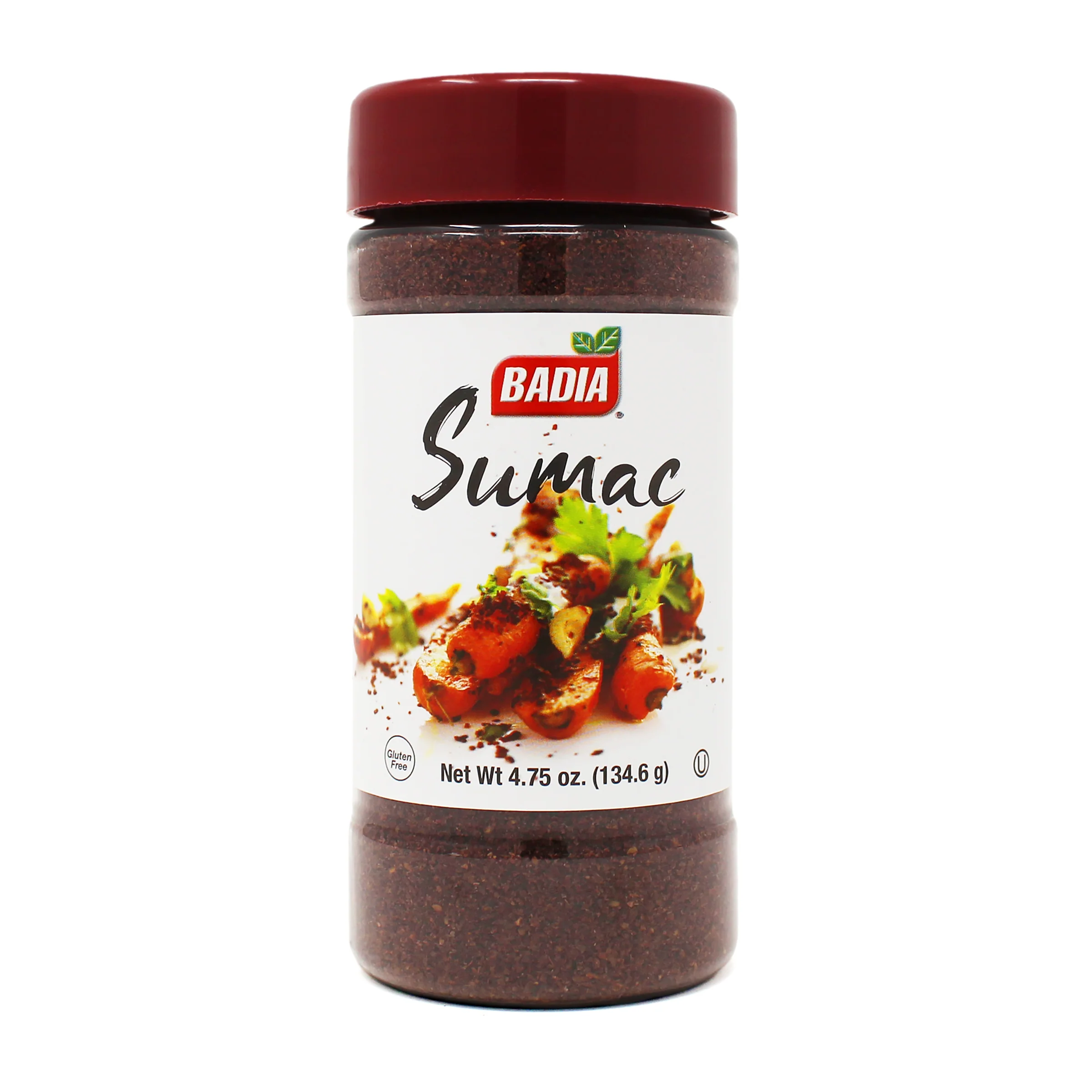
Badia Sumac Spice, 4.7 oz
Sumac is the dried, ground berry of the wild sumac bush — deep burgundy, coarse-textured, with a sharp, lemony tartness that hits the tongue cleanly without the moisture of fresh citrus. It's the souring agent of the Levant.
Common Uses
Dust over fattoush salad with toasted pita, cucumber, and tomato. Rub onto chicken thighs and lamb skewers before grilling. Sprinkle over hummus, labneh, and baba ghanoush with a drizzle of olive oil. Mix with thyme, sesame, and salt for za'atar. Finish grilled fish, roasted onions, and rice pilaf. Rim glasses for cocktails where you'd otherwise use citrus salt.
Cuisine Context
Sumac is essential across Lebanese, Syrian, Palestinian, Jordanian, Turkish, and Iranian cooking. It's what gives musakhan its character — Palestinian roasted chicken layered with sumac-stained onions over taboon bread — and what makes a proper fattoush taste like fattoush. In Iran it seasons kebab koobideh tableside. Mediterranean kitchens use it where Italians would reach for lemon zest.
Pro Tip
Add sumac at the end, not during cooking. Heat dulls its tartness and mutes the color. A pinch on the plate just before serving keeps the brightness sharp and the burgundy hue intact.
Ships from Doral, FL.
Original: $4.85
-65%$4.85
$1.70Product Information
Product Information
Shipping & Returns
Shipping & Returns
Description
Sumac is the dried, ground berry of the wild sumac bush — deep burgundy, coarse-textured, with a sharp, lemony tartness that hits the tongue cleanly without the moisture of fresh citrus. It's the souring agent of the Levant.
Common Uses
Dust over fattoush salad with toasted pita, cucumber, and tomato. Rub onto chicken thighs and lamb skewers before grilling. Sprinkle over hummus, labneh, and baba ghanoush with a drizzle of olive oil. Mix with thyme, sesame, and salt for za'atar. Finish grilled fish, roasted onions, and rice pilaf. Rim glasses for cocktails where you'd otherwise use citrus salt.
Cuisine Context
Sumac is essential across Lebanese, Syrian, Palestinian, Jordanian, Turkish, and Iranian cooking. It's what gives musakhan its character — Palestinian roasted chicken layered with sumac-stained onions over taboon bread — and what makes a proper fattoush taste like fattoush. In Iran it seasons kebab koobideh tableside. Mediterranean kitchens use it where Italians would reach for lemon zest.
Pro Tip
Add sumac at the end, not during cooking. Heat dulls its tartness and mutes the color. A pinch on the plate just before serving keeps the brightness sharp and the burgundy hue intact.
Ships from Doral, FL.